Climbing Mont Blanc in a day is one of the most demanding endurance goals an alpinist or athlete can set. Standing at 4,808 m, Mont Blanc is the highest peak in Western Europe — and tackling it in a single push requires a combination of fitness, strength, technical skill, and mountain experience.
Our guided one day climbs start at the church in Les Houches, climbing on foot via the Gouter route. This the true Mont Blanc in a day challenge, from valley to summit! It’s also possible to climb to the summit from the Aiguille du Midi lift when the Trois Monts route is in safe condition, although that’s a topic for a different blog post.

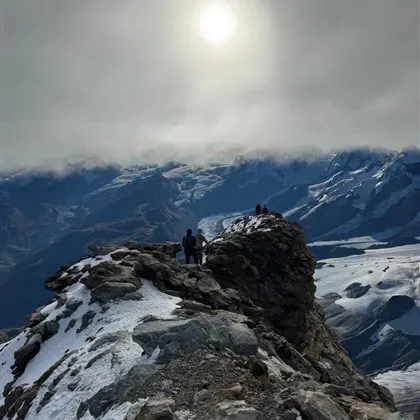
Summit of Mont Blanc on a cold, windy day. We try and time the one day climbs for good weather, but we still have to be prepared for low temperatures.
1. Fitness Level Required for Mont Blanc
To climb Mont Blanc in one day, you need ultra-endurance fitness. Expect over 3,800 m of elevation gain and loss, often on steep, exposed terrain. Training should include long mountain days or hilly ultramarathon-style runs to build cardiovascular endurance and muscular stamina.
Think of the physical demands as similar to a 50 – 80 km mountain ultra — sustained effort for 14–18+ hours at altitude. A progressive training plan, with a gradual increase in time and vertical gain each week is the way to approach this challenge. Our previously successful climbs have been with seasoned trail runners, cyclists and ski tourers. We’ve been less successful with folk from a pure hill walking background, and those that have completed one day climbs of less technical peaks (in the US specifically). Not to say that isn’t a valid background before Mont Blanc in a day, but the technical aspects of Mont Blanc make it a much harder challenge than many other mountains.
Incorporate uphill interval training, perhaps weighted hikes, and long descents to prepare your legs and lungs for the challenge.
Here you can find a strava file from a quick guided climb of the peak in September 2025, to give you an idea of stats.
2. Speed is safety
There’s always some sort of time pressure on the big mountains. The afternoons on Mont Blanc can bring cloud, storms, soft snow and rockfall in the grand couloir. There is also the factor of simply being out so long, we get more and more tired and that’s when mistakes happen and people are tripping over their crampons and falling off the side of the hill.
So we have a set of timing guidelines that we use on the mountain, to keep things in check. It’s certainly fair to say it’s no good relying on “I’m slow but I can go forever”. You will run out of time. That’s also true for the standard three day Mont Blanc ascent, but we’re stacking so much vert into one day on the single push climbs it’s felt much more acutely.
Train to be fast, and strong. Then we can go “steady” on summit day and we’ll have plenty of reserve to make the time checks.

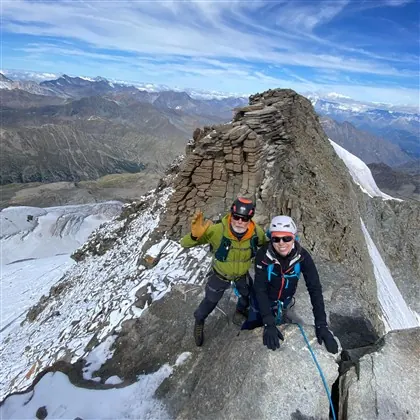
On the summit with Dan after a smooth ascent from Les Houches that morning. Great weather and conditions, but still wrapped up warm. We can’t move fast enough to generate a lot of heat at altitude, so packing some down clothing is essential.
3. Strength and Conditioning
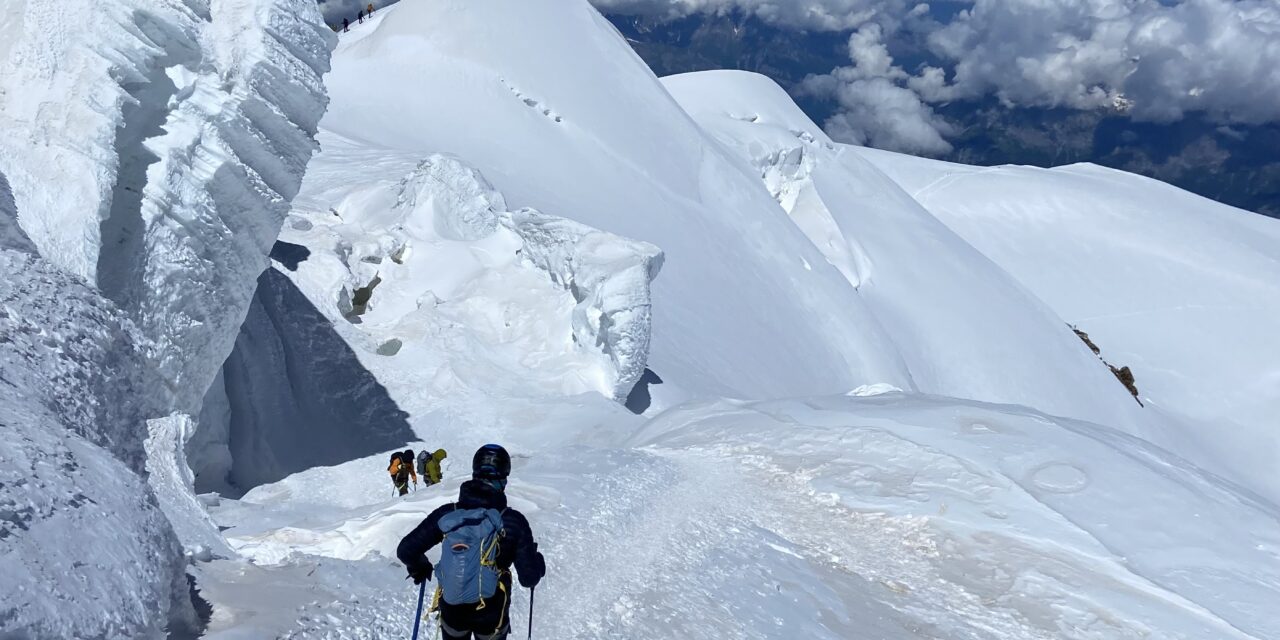
Descending from Mont Blanc is often more punishing than the climb. Strong legs, glutes, and core muscles are essential to control each step on tired legs. You have to control each step, to stay safe and in control of your crampons in some quite exposed and hazardous places.
Add strength training for mountaineering — squats, lunges, deadlifts, and balance work — to improve durability and prevent injuries. This where mountaineering differs greatly compared with flat running. Your ability to run fast on the flat is useful, but it’s important to combine that fitness with some strength to take your speed into the mountains.
Hilly cycling is also a great training method for the ascent, but it’s common for cyclists to suffer on the long descent from the summit. The eccentric movements can really fatigue the quads and glutes if you’re not used to it. So spending some time off the bike and on your feet during training will be important to prevent this.

A little kit layout before a one day guided climb in 2024. The ‘sack starts off heavy in Les Houches, and by the summit it’s pretty light as everything is getting worn, or eaten! It’s a good idea to occasionally practice with your kit, to get used to the weight and packing options.
4. Technical and Mountain Skills
Physical fitness alone isn’t enough. A one-day Mont Blanc ascent demands confident movement on mixed terrain: snow, ice, and rock. You’ll need:
-
Crampon and ice-axe skills for safe travel on steep snow and glaciers
-
Scrambling technique for rocky sections, between the Tete Rousse and Gouter refuge’s.
When fatigue sets in at altitude, good technique and practiced movement keeps you safe and fast. The majority of our guided one day climbs on Mont Blanc, the Matterhorn, Grand Paradiso and other mountains are combined with acclimatisation climbs, where we practice these technical skills.
5. Experience and Strategy
Success on Mont Blanc depends on experience in long hill days. You should already know how your body responds to altitude, what nutrition and hydration strategies work for you, and how to manage pacing over 14–20+ hours.
Plan your Mont Blanc training months in advance and simulate long climbs whenever possible — combining endurance with technical sections. For those in the UK, some nice long days in the fells linking together scrambles is ideal.
Final Thoughts
Climbing Mont Blanc in a single day isn’t just a test of endurance — it’s the culmination of years of mountain experience, training, and preparation. For those with the right fitness and alpine skills, it’s one of the most rewarding challenges in the Alps.


 Last-Minute Bookings & Custom Dates