We’ve just returned from a seven-day ski touring trip in the Silvretta region of Austria, linking together a series of huts and summits over the course of the week. It’s a brilliant area for this sort of trip—glaciated terrain, relatively friendly logistics, and plenty of options depending on how you want to shape each day.
We split the week across three huts, spending two nights in each. Each one had its own character. The Jamtal Hütte is a bit of a beast—more like a mountain hotel than a hut, busy and well-equipped. The Wiesbadener Hütte, by contrast, feels far more tucked away and remote, sitting right under some of the bigger peaks in the range. Then over on the Swiss side, the Silvretta Hut has that more traditional alpine feel—quieter, simple, and exactly what you want at the end of a long day.

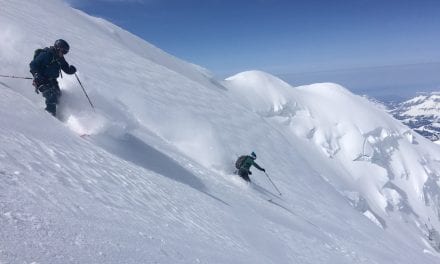
Big valleys and plenty of powder to ski 🙂
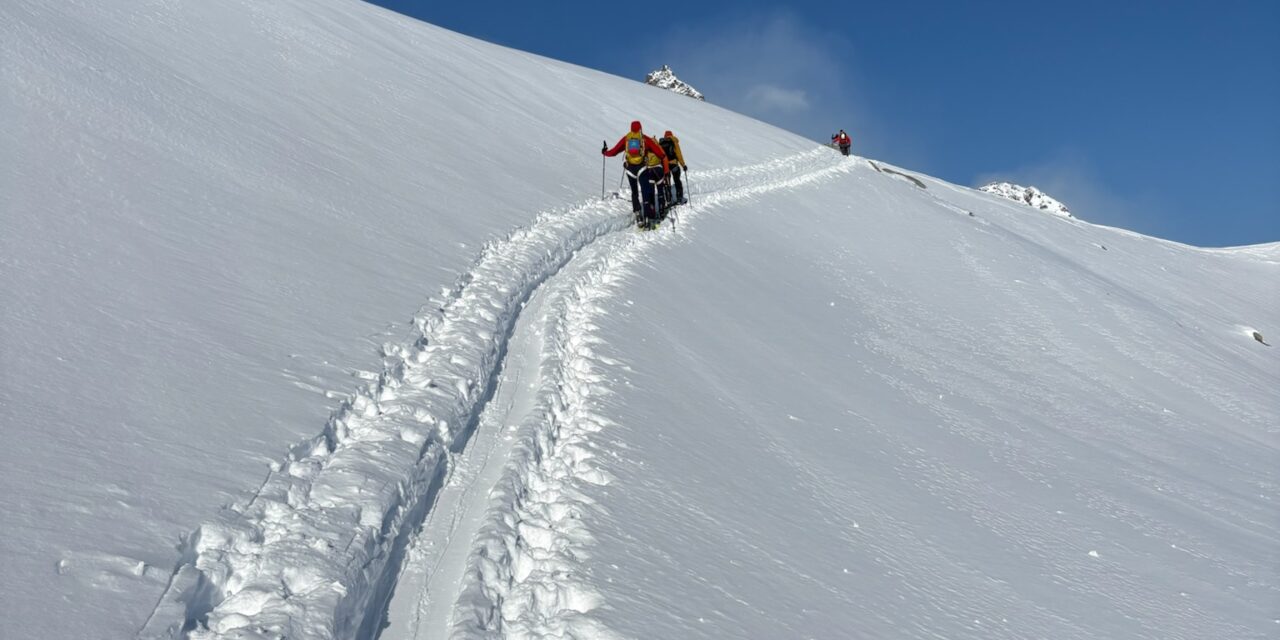
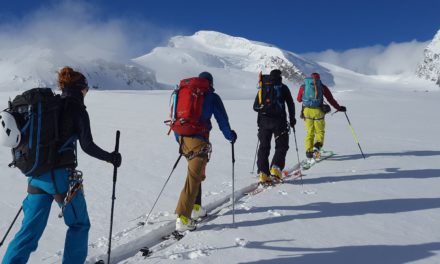
Most days followed a fairly steady rhythm. We were generally out for around five hours, with roughly 1200m of ascent, which felt like a good balance over the course of the week. One of the real strengths of the Silvretta is how flexible it is. You can move between huts with a relatively straightforward 800m climb if needed, or extend the day with extra summits or laps when the snow and weather play ball.
And that flexibility turned out to be pretty important.

Avalanche rescue practice. Always good to have a little refresher on every tour.
The first few days gave us some really enjoyable skiing, with fresh snow and some proper powder turns. But midweek the weather turned. The wind picked up dramatically, with gusts well over 60km/h, and it felt pretty wild out there. That was very much a “keep it sensible” day—no summits, no pushing it, just moving carefully and enjoying the experience for what it was.

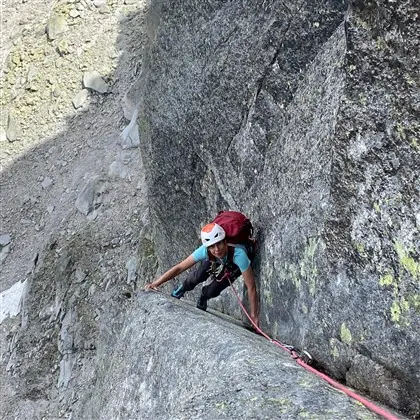
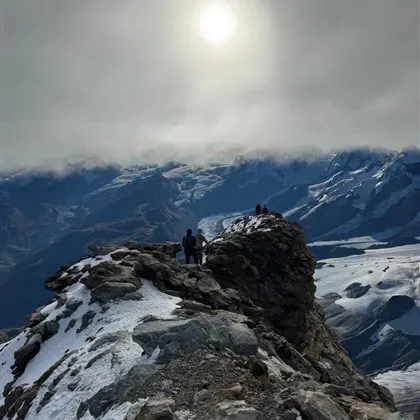
Down climbing on the Piz Buin
Unsurprisingly, the wind did a number on the snow. After that, it became much more of a search mission—seeking out sheltered slopes, avoiding wind crust, and adjusting plans as we went. Some of the skiing was, frankly, pretty unpleasant. Breakable crust, grabby surfaces… the kind of snow where you’re working hard just to get down in one piece. There were a few descents where it was more about careful kick turns and controlled traversing than anything resembling good skiing.
But even in those conditions, you could still find the good stuff if you looked hard enough. By the final day, we were back on softer snow on north-facing slopes that had been protected from the worst of the wind—proper, enjoyable turns again to finish the trip.
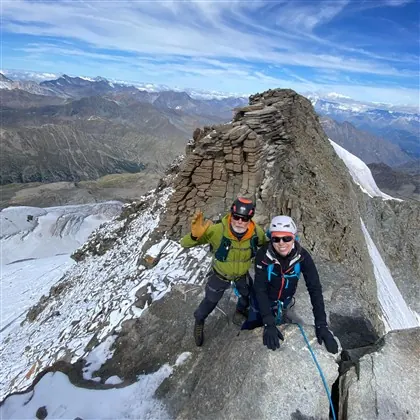
Despite the mixed conditions, we still managed to get up some great peaks. We skipped a couple of early objectives due to avalanche concerns, but climbed the Gemmspitz—with its short, exposed summit ridge—along with the classic Piz Buin, and finished on the Schneeglocke on our last day.
Another big plus of the Silvretta is how well it caters for different avalanche conditions. Around each hut there are options—low-angled terrain when things are a bit spicy, and steeper lines when the snowpack is stable. That made decision-making a lot more straightforward through the week and meant we could always find something worthwhile to do.
All in all, it’s a fantastic area for a hut-to-hut ski tour. Big enough to feel like a journey, but manageable, and with enough variety to keep things interesting even when conditions aren’t perfect.
We’ll definitely be back—already planning a slightly shorter five-day version for 2027. For anyone with some prior ski touring experience looking to step into a multi-day alpine trip, it’s hard to beat.

The comfortable summit of the Schneeglocke.

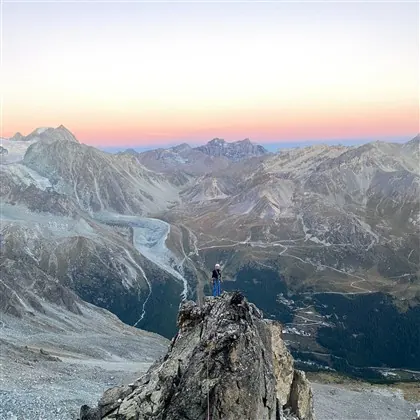
Sunsets from the west facing Silvretta hut.

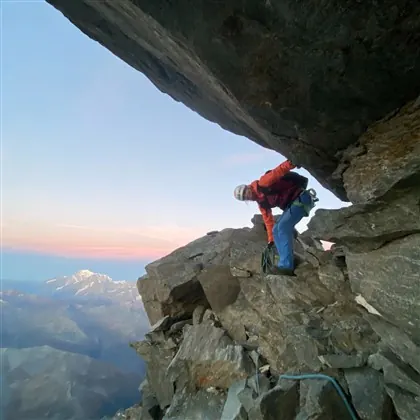
The scrambling section on the Piz Buin.


Wild winds and spindrift above the Weisbadner hut. We skipped our planned objective of the Silvretta horn, and went to ski powder instead.

Summit of the Gemmspitz

 Last-Minute Bookings & Custom Dates