The Patrouille des Glaciers is a fairly unique ski mountaineering race. It isn’t simply about being a fast skier or being able to climb efficiently uphill. Teams have to move quickly over glaciers, steep snow and technical terrain, while carrying everything they need and, crucially, doing it all as a team.
With six British Army teams preparing for this year’s PDG, I spent five days based in Arolla with the teams, working on the skills and techniques they would need to make the most of their race.
Arolla is an ideal base for this sort of training. There is an enormous amount of varied mountain terrain accessible directly from the valley, including glaciers, steep snow slopes and long ski descents. Perhaps more importantly, it provides easy access to sections of the actual PDG course.
The aim of the week wasn’t to try to turn everyone into an elite ski racer in five days. Instead, it was about making the teams more efficient and comfortable in the mountains. Small improvements in technique, transitions and teamwork can make a surprisingly big difference over the many hours of a PDG.
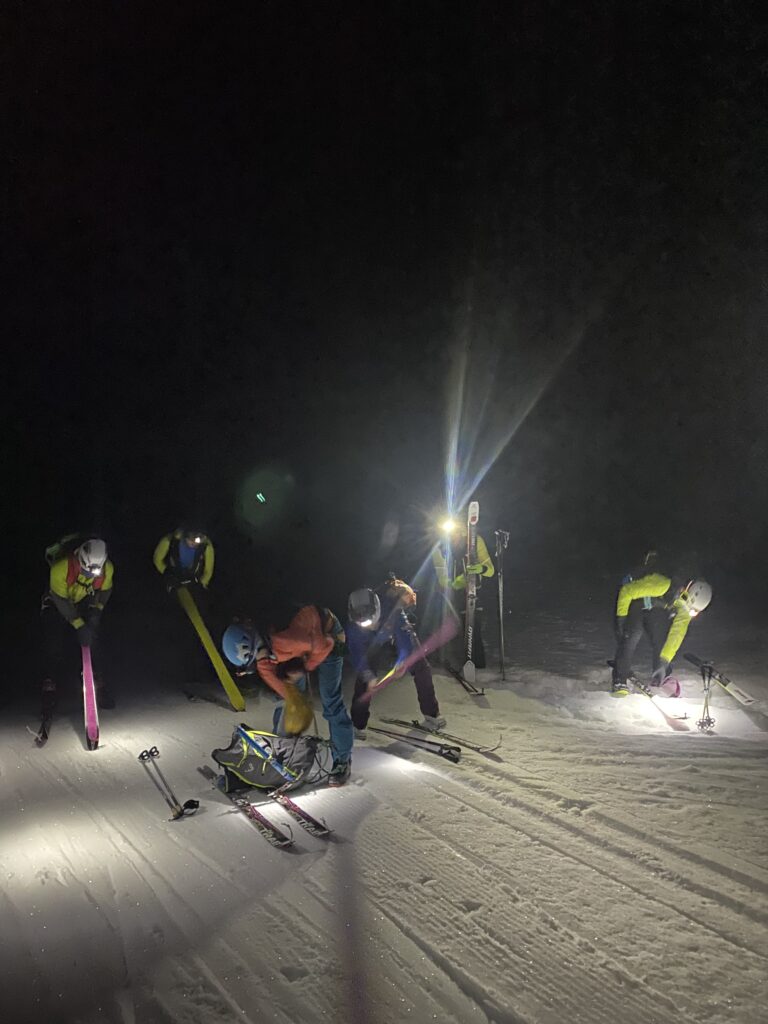
An early start, both for night time skiing practice and to beat the heat of the afternoon.
Building the skills
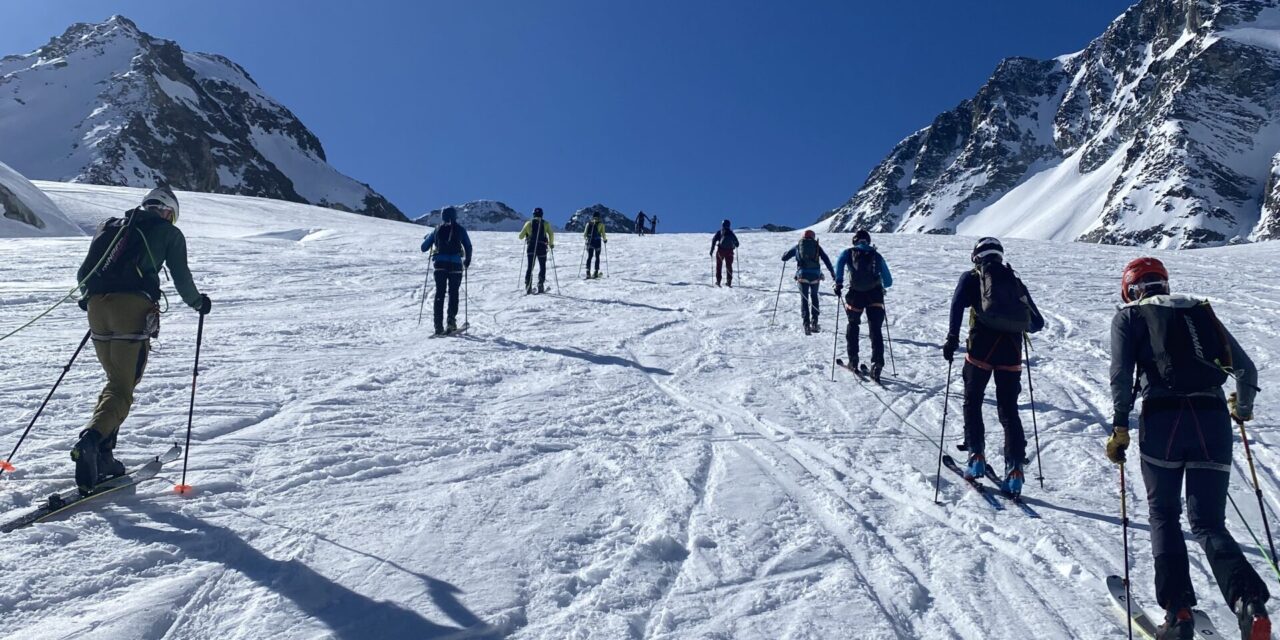
We spent plenty of time looking at uphill skinning technique. The PDG involves a huge amount of climbing, so being able to move efficiently uphill is just as important as skiing well on the descent.
Kick turns were another obvious focus, particularly on steeper slopes where an inefficient turn can quickly become tiring. We worked on making these movements controlled and consistent, rather than simply trying to get around the corner by brute force.
There was also plenty of practice on icy slopes and bootpacking. These are skills that can be relatively easy to overlook when most of your training is done on good ski slopes, but they become particularly important when conditions are hard and steep.
Downhill skiing was another major part of the week. The objective wasn’t necessarily to ski aggressively or at maximum speed, but to ski efficiently. On a long ski mountaineering race, every unnecessary turn, stop or loss of control costs energy.
We worked both on individual skiing and on skiing together as a team.
Learning to move as a team
The PDG is a team event, and moving quickly as an individual is very different from moving quickly as part of a team.
We spent time practising roped skiing and looking at how the teams could maintain a good rhythm while remaining connected. There is a balance to be found between keeping the team together and allowing the stronger members to move efficiently.
Transitions were another recurring theme. Skins on, skins off, skis on, skis off, crampons and ropes – none of these tasks are particularly complicated individually, but over a long race there are plenty of opportunities to waste time.
The goal was to make these processes increasingly automatic.

Equipment checks
A good proportion of the week was also spent talking about equipment.
With a race like the PDG, equipment needs to work reliably in a wide range of conditions, while still being light enough to carry for many hours. We went through equipment, checked setups and discussed the practical details of what each team would be using.
These discussions are often just as valuable as the physical training. There is little point having the perfect piece of equipment if you don’t know how to use it efficiently when you’re tired, cold or standing on a steep slope.
Recceing the PDG
One of the highlights of the week was getting onto some of the actual PDG terrain.
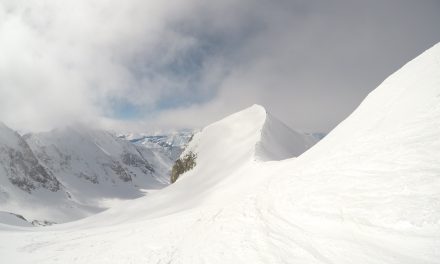
We made the long journey from Arolla towards Tête Blanche, travelling via the Col Bertol. This provided an excellent opportunity to combine several of the skills we had been working on during the week, while also giving the teams some first-hand experience of the terrain they would eventually encounter during the race.
Knowing what lies ahead can make a big difference on race day. Steep sections, transitions and changes in terrain are much easier to deal with when they aren’t completely unfamiliar.
We also made a tour of Mont Collon, which provided excellent glacier terrain as well as valuable acclimatisation. Another day took us into the Aiguille Rouge area to the west of Arolla, giving us yet more varied terrain in which to work on skiing and mountaineering skills.
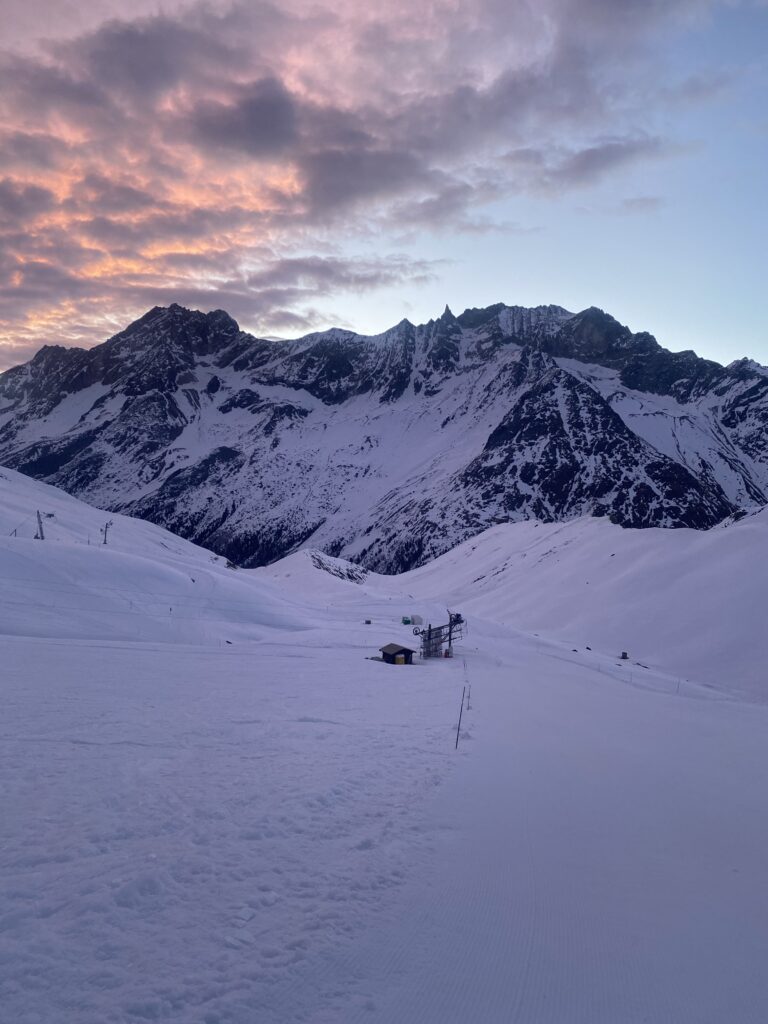
The pistes of Arolla on a sun set ski.
Five days in the mountains
By the end of the five days, the teams had covered a huge range of skills and terrain.
There had been plenty of uphill skinning, kick turns, bootpacks, steep and icy slopes, downhill skiing, roped travel, equipment checks and discussions about how to make everything work more efficiently.
Just as importantly, the teams had spent five days operating together in the mountains.
For a race such as the Patrouille des Glaciers, that familiarity is hugely valuable. When the race starts and the teams are moving through the night, often in difficult conditions, the aim is for the technical movements and teamwork to require as little thought as possible.
The six Army teams came from different branches of the military, but they all had the same objective: to arrive at the start of the PDG as prepared as possible.
Hopefully the week in Arolla has given them a good foundation — and when they eventually reach Tête Blanche in the middle of the race, they’ll already know a little of what lies ahead.

A team in action, roped up skiing, during the Tour de Bertol day.